


The Power of Doing Nothing: Why Rest Might Be Your Most Productive Decision
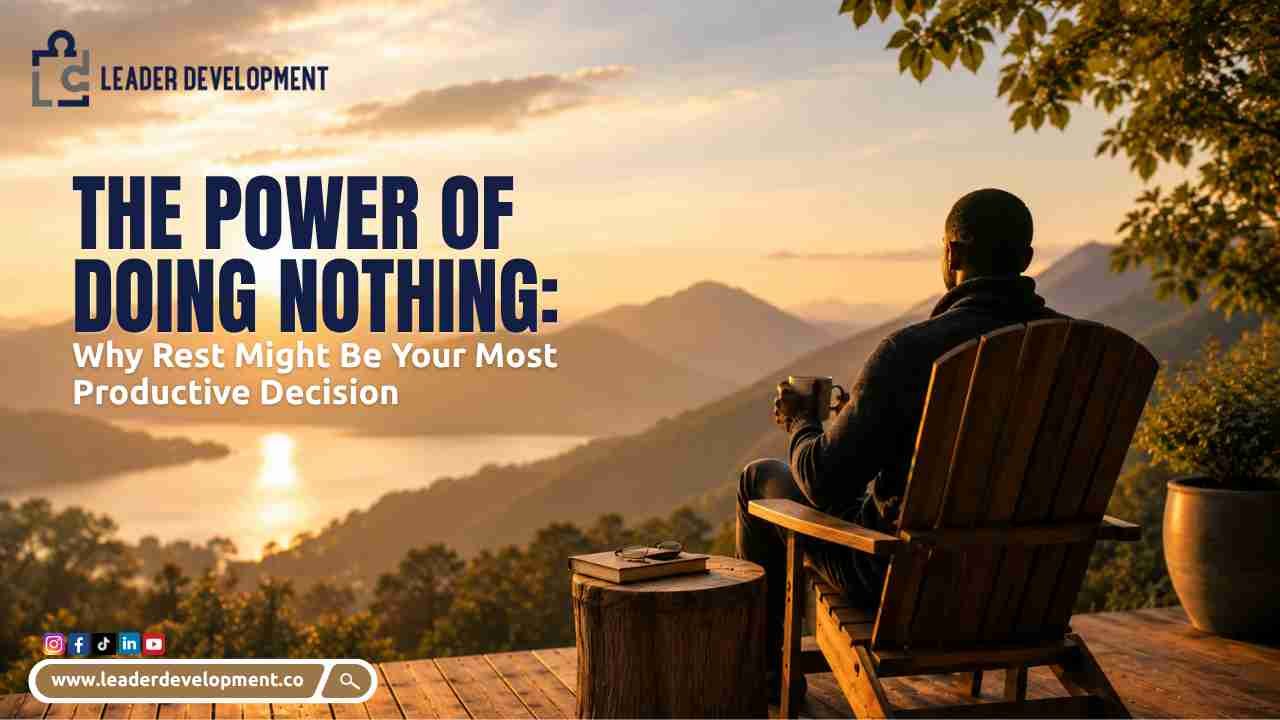
The power of doing nothing is often overlooked in a culture that celebrates constant activity. Full calendars are seen as a sign of importance, long working hours are treated as proof of commitment, and rest can easily be mistaken for laziness.
We live in a culture that celebrates being busy, but we often overlook the power of doing nothing. Full calendars are seen as a sign of importance, long working hours are treated as proof of commitment, and rest can easily be mistaken for laziness.
Many of us have become so accustomed to doing that we no longer know how to simply be.
Recently, I returned from the longest vacation I have taken in my adult working life. It was rewarding, refreshing, and surprisingly difficult.
The difficult part was not the travel or being away from my normal routine. It was learning how to do nothing.
I answered a few emails and even made one work call during the trip. I am not particularly proud of that. However, I did not open my computer.
That felt like progress.

The Power of Doing Nothing in a Busy World
For most of the trip, I had the opportunity to disconnect from work, enjoy the experience, spend time with others, and embrace moments when there was nothing demanding my attention.
That last part was uncomfortable.
I am used to knowing what comes next. I am used to having a schedule, a responsibility, or a task that needs to be completed.
When there was nothing to do, I found myself wondering what I should be doing.
Perhaps you can relate.
Many of us have connected our sense of value to productivity. When we are working, achieving, leading, fixing, and producing, we feel useful.
But when we stop, uncomfortable questions begin to surface.
Am I wasting time?
Am I falling behind?
Should I be doing something more productive?
Why do I feel guilty when I rest?
These questions reveal how deeply our identity can become tied to our output.
The Cost of Constant Productivity
Working hard is not wrong.
Discipline, responsibility, ambition, and excellence are valuable qualities. They help us support our families, build meaningful careers, serve others, and pursue important goals.
The problem begins when work becomes constant.
We were not created to work every waking hour of every day.
Without healthy periods of rest, we can become impatient, emotionally reactive, mentally tired, and disconnected from the people around us.
We may still complete our tasks, but we do not always complete them from a healthy place.
Sometimes we are physically present but mentally exhausted.
Sometimes we continue leading, but our joy has disappeared.
Sometimes our families and relationships receive only what is left of us.
Rest is not laziness. It is part of sustainable productivity, emotional wellbeing, healthy leadership, and spiritual growth.

What the Bible Teaches About Rest
One reflection that stayed with me comes from Max Lucado's book, Traveling Light.
He points out that the Fourth Commandment, keeping the Sabbath, contains more words than any of the other commandments.
That is significant.
God did not present rest as an optional activity for people who had nothing important to do.
Rest was commanded.
It was built into the rhythm of life.
God Himself rested after creation. Not because He lacked strength, but because rest was part of the pattern He established.
If rest was important enough to be modelled by God and commanded for His people, perhaps it deserves a more important place in our own lives.
Yet many of us still resist it.
We tell ourselves that we will rest after the next deadline, the next project, or the next busy season.
The problem is that everything is rarely finished.
There will always be another email, another responsibility, and another task waiting for our attention.
If we wait until everything is complete before we rest, we may never truly rest at all.
What Changed When I Returned to Work
When I returned from vacation, I expected to feel overwhelmed.
There were emails waiting. My routine had changed. I also had to adjust to time zone differences and the natural difficulty of returning to normal responsibilities.
At first, I was slower than usual.
But I noticed something important.
My triggers were not as strong.
My anger felt more balanced.
My joy felt closer than it had in a long time.
I had more emotional space.
The work had not disappeared, but I was approaching it differently.
That became one of the most important lessons from the experience.
Rest does not always remove the workload.
Sometimes it changes the person carrying it.
The same responsibilities can feel different when your mind is clearer, your body is refreshed, and your spirit is settled.
Sometimes the best productivity strategy is not another system, another meeting, or a longer working day.
Sometimes the best productivity strategy is genuine rest.

A Lesson From a Silent Retreat
Several years ago, I was preparing to spend a few days alone in a mountain cabin for a silent retreat.
Before leaving, I asked a friend to suggest some exercises that would help me connect with God.
I expected him to give me a plan. Perhaps some scriptures to read, questions to answer, prayers to follow, or activities to complete.
Instead, he gave me simple advice.
"Just go and be."
That advice challenged me.
Even my desire to connect with God had become something I wanted to turn into a task.
I wanted a method.
I wanted a process.
I wanted something I could complete successfully.
But during that retreat, I learned to be still.
God showed up.
Not in the way I expected, but in the way I needed.
That experience reminded me that not every meaningful moment needs to be produced.
Some things can only be received.
Don't Turn Rest Into Another Task
I considered sharing a list of practical ideas for resting.
Then I realised many of us would simply turn that list into another productivity checklist.
We would plan the perfect rest schedule.
We would measure whether we were resting correctly.
We would try to become productive at being unproductive.
That would completely miss the point.
Rest does not need to be complicated.
It may mean sitting quietly without reaching for your phone.
It may mean taking a walk without listening to anything.
It may mean spending time with your family without checking your email.
It may mean sleeping without feeling guilty.
It may mean praying without rushing.
It may simply mean being fully present.
Rediscover the Power of Doing Nothing
The power of doing nothing is not about avoiding responsibility or lowering your standards.
It is about creating enough space for your body, mind, and spirit to recover before returning to the work that matters most.
Your work will still be there when you return.
The emails will still be waiting.
The responsibilities will still exist.
But perhaps you will return with greater clarity.
Perhaps your reactions will be calmer.
Perhaps your joy will be closer.
Perhaps your approach to the same work will be healthier.
In a world that constantly tells us to do more, choosing to pause is a courageous decision.
Rest is not weakness.
Rest is wisdom.
The power of doing nothing reminds us that our value is not measured by how busy we are but by who we are becoming.
Sometimes doing less is exactly what prepares us to do our best.